Basic traffic theory
| Site: | Traffic Theory Sint Maarten |
| Course: | Primary school |
| Book: | Basic traffic theory |
| Printed by: | Guest user |
| Date: | Friday, 29 May 2026, 9:54 PM |
1. Intro
Hello young road users of Sint Maarten!
Welcome to this special traffic book, made just for you! As a student in grade 7, you are becoming more and more independent and you are going out on your own or with friends more often — on foot, by bicycle, or maybe as a passenger in a car. That is why it is extra important now that you know the traffic rules well.
Sint Maarten is a beautiful island with its own special traffic situations. From the busy streets of Philipsburg and Marigot Road to the quieter neighborhoods like Cole Bay and Simpson Bay, important rules apply everywhere to make sure that everyone gets safely from point A to point B. Whether you are cycling to school, walking to the beach, or taking a ride with your family along the Great Salt Pond — knowing the traffic rules can save lives.
In this book you will learn everything you need to know about traffic on Sint Maarten. We cover the most important traffic signs you will come across, the rules for pedestrians and cyclists, and how to behave as a passenger in a car. We also pay attention to the special situations you encounter on our island, such as sharing the road with other road users in busy tourist areas and crossing safely near the harbor and the airport road.
By learning and applying the rules in this book, you are contributing to safe traffic for everyone on Sint Maarten. Because road safety starts with you!
Good luck studying and most importantly — always stay alert in traffic!
2. What is traffic?
What is traffic and what is your role?
Traffic is everywhere around you on Sint Maarten! It is all the movement of people and vehicles on roads, paths and squares. Just think about what you see on your way to school in the morning: cars driving to work, trucks transporting goods to a construction site, cyclists out for a ride, and pedestrians taking a walk along the waterfront in Philipsburg.
On Sint Maarten we have many different types of traffic. There are large trucks delivering supplies, tourists in rental cars heading to the beach at Maho or Orient Bay, people doing their grocery shopping, and children just like you cycling to school. Even the ferry that takes people to St. Barths and Anguilla is part of the traffic on our island!
As a student in grade 7 you have different roles in traffic. Most of the time you are a pedestrian. For example, you walk from home to the sports fields, or from school to your friends in the neighborhood. As a pedestrian you need to pay close attention to where you are walking and always use pedestrian crossings.
You are also often a cyclist. Maybe you cycle to school every day or to the store for your parents. On a bicycle you are faster than on foot, but also more vulnerable. You share the road with cars, especially on the main roads like Bush Road or the Walter Nisbeth Road in Philipsburg.
Lately we are seeing more and more fat bikes on Sint Maarten — those electric bicycles with thick tires that can go quite fast. Fat bikes have become popular, especially among young people, because you can easily ride them on the beach and on unpaved roads. But be careful: fat bikes can reach speeds of 25 kilometers per hour or more, making them almost as fast as some scooters! This means you need to be extra careful and think carefully about where and how fast you ride.
A big danger we are seeing more and more often is cyclists using their phone while riding. Whether it is to send a message, change the music, or take a photo of the beautiful sunset over Simpson Bay — using your phone while cycling is life-threatening! Your attention is taken away from the traffic around you. You don't see that car pulling out, you don't hear that horn, and you notice that iguana on the road too late. Especially on a fat bike, which goes so fast, one second of inattention can be fatal.
Sometimes you are a passenger in a car. For example, you and your family drive to the beach at Cupecoy, or you take a ride to the French side to visit Grand Case. Even though you are not driving yourself, as a passenger you still have responsibilities!
What makes traffic on Sint Maarten special is that we also need to watch out for animals. Iguanas sometimes cross the road, especially in warmer weather, and you may also encounter goats and chickens on the road in some neighborhoods.
All these different road users have to share our roads together. That is why there are traffic rules: to make sure that everyone can travel safely and smoothly. By knowing and following the rules, you help keep traffic on Sint Maarten safe for everyone — from the smallest pedestrian to the largest truck!
3. The development of traffic
The development of traffic
Long ago, people had to travel great and small distances every single day. They were hunters or fishermen and had to chase their prey on land or on a river or sea. Sometimes they were away for weeks at a time, searching for game or fish. To move across water they used canoes — the very first invention for water transportation. These were made from hollowed-out tree trunks. On land they used a kind of sled to move their prey.
Because people did not always want to use their legs on these long journeys, they came up with all kinds of aids. They climbed onto the backs of donkeys, horses, camels and elephants. These animals could also carry their prey and luggage. People pushed through forests and bushes to reach their destinations. Sometimes they used paths made by wild animals. But often they had to make the paths themselves. These paths formed the first roads on land.
One of the most important inventions in history was the wheel. This brilliant invention made it possible to build carts and wagons that could be pulled by animals. With these, people could transport much heavier loads than had ever been possible before.
Centuries later, an even more revolutionary invention was made: the engine. Slowly but surely the engine took over the role of animals and the age of the automobile began. This invention changed the world completely. Roads were also improved and adapted to modern times.
On the water, people developed the original canoes into better and better boats and ships. These vessels were used for fishing and later also for trading with nearby countries.
But people did not stand still. When they saw the freedom of birds flying above them, they dreamed of being able to fly. Many people tried to fly with homemade wings, but unfortunately this did not work. After many experiments the hot air balloon was invented — the first successful way for people to take to the air. But because this vehicle was hard to steer, people kept on experimenting. They developed different kinds of airships that were easier to control. Today, after all these experiments, we have the airplane and the helicopter — the modern inventions that allow us to travel quickly through the air.
Traffic on Sint Maarten through the centuries
This worldwide development of traffic is also reflected in the history of Sint Maarten. The original inhabitants of the Caribbean walked across these islands thousands of years ago. They made paths between their villages and to the best fishing spots along the coast. They also used canoes to travel between the islands and to fish in the sea around Sint Maarten.
When the Europeans arrived, they brought horses and donkeys to the island. These animals were used to transport goods and supplies. The island became an important trading post in the Caribbean, and its famous salt pond played a big role in the economy. Workers transported salt to boats at the harbor, which then brought it to larger ships.
In the 18th and 19th centuries the first real roads appeared on Sint Maarten. These were mainly intended for transporting goods between the settlements on the Dutch and French sides of the island.
The arrival of the car changed Sint Maarten dramatically. In the 1950s there were only a handful of cars on the island. Most people walked or rode on animals. But slowly more and more cars arrived. In the 1970s and 1980s the roads were paved with asphalt instead of sand and gravel.
Today Sint Maarten has a modern road network. We have traffic lights in Philipsburg, roundabouts at important intersections, and roads that connect all parts of the island. The harbor and the airport have also become modern transportation hubs that connect Sint Maarten with the rest of the world.
Modern inventions
Just like everywhere else in the world, we also see new traffic inventions on Sint Maarten. Electric cars are becoming more and more common. Fat bikes — electric bicycles with thick tires — have become popular among young people who want to get from place to place quickly without sweating in the hot sun. We also see more tourists renting electric scooters to explore the island.
Traffic on Sint Maarten is therefore constantly developing. From the original footpaths to modern asphalt roads, from canoes to cruise ships, from donkeys to electric cars — every major invention brought its own way of getting around. And who knows what new inventions the future will bring us!
4. Division of traffic
Division of traffic on Sint Maarten
In the previous lesson we read how clever and resourceful people were. With simple means of transportation they moved from one place to another. They had vehicles for the air, for the water and for the land. This is why we are going to divide traffic into three groups:
- Air traffic
- Water traffic
- Land traffic
1. Air traffic on Sint Maarten
For transportation through the air we use, for example, airplanes, helicopters and rockets. On Sint Maarten you regularly see airplanes landing at Princess Juliana International Airport — one of the most famous airports in the Caribbean, known for planes flying just above the beach at Maho. These are mostly tourist flights from the Netherlands, the United States and other Caribbean islands. Small charter planes also fly tourists to neighboring islands like St. Barths, Anguilla and St. Kitts.
Helicopters are sometimes seen flying over the island, especially for emergencies or special transports. For fun, some people enjoy parasailing above the coast of Sint Maarten — a kind of parachute pulled along by a boat.
2. Water traffic around Sint Maarten
For transportation over water, people use vessels. Around Sint Maarten you see many different kinds of boats. Large cruise ships carrying thousands of tourists dock at the port in Philipsburg. Cargo ships also bring goods to the island that we find in our stores.
Off the coast you see boats taking tourists to snorkeling and diving spots. Sailboats belonging to tourists are moored in the marina, and local fishermen use small motorboats to fish. Water taxis connecting the Dutch and French sides of the island, as well as ferries to neighboring islands, are also important means of transportation that operate daily.
3. Land traffic on Sint Maarten
Motorized vehicles, non-motorized vehicles and pedestrians all belong to land traffic. On Sint Maarten you see many cars, taxis and minibuses, which are a popular and affordable way to get around the island. Vehicles travel on all the roads of the island, from Philipsburg to Cole Bay and from Simpson Bay to the French Quarter.
Non-motorized vehicles are mainly bicycles and the new fat bikes. Many students cycle to school every day. Pedestrians can be found everywhere: tourists walking through Philipsburg, children on their way to school, and people walking to the store.
Tourists in rental cars form a special group — they do not always know the roads well and may drive slowly or make unexpected turns.
Modern developments
Looking at modern developments, various combinations will be possible in the future. We already have amphibious vehicles that can travel both on land and in water. On Sint Maarten this would be very handy for driving straight from the beach into the water! Amphibious aircraft, which can land and take off on both land and water, would also be practical for an island like ours.
Amphibious vehicles can travel both on land and in water.
Amphibious aircraft can take off and land on both land and water.
4.1. Luchtverkeer
Air traffic
Air traffic is all movement of airplanes, helicopters and other aircraft in the air and at airports. This might seem far removed from your daily life on Sint Maarten, but air traffic actually plays a very important role for our island!
Air traffic on Sint Maarten
Princess Juliana International Airport is the heart of air traffic on Sint Maarten. Every day planes from different airlines land and depart. Tourists arrive from the Netherlands, from the United States and from other Caribbean islands with local airlines. Sint Maarten is one of the busiest airports in the Caribbean, and its location right next to Maho Beach makes it one of the most famous in the world — where you can watch planes fly just meters above your head!
Small planes are also seen regularly. These fly between neighboring islands or bring tourists on day trips to St. Barths, Anguilla or St. Kitts. Helicopters are also sometimes seen, especially during emergencies or for special transports to places that are difficult to reach.
The pilot: the driver of the airplane
Just like a car has a driver, every airplane has a pilot. The pilot is responsible for safely operating the airplane and all the passengers on board. Pilots must study and train for many years before they are allowed to fly. They know all the instruments in the cockpit and know exactly how to take off, fly and land the airplane.
On Sint Maarten you see pilots mainly at the airport. They check their airplane before the flight, look at the weather and plan their route. Pilots must always stay in contact with air traffic control to know when they are allowed to take off or land.
The air traffic controller: the officer of the sky
In the control tower of Princess Juliana Airport, air traffic controllers work. They are a kind of traffic officer of the sky! Their most important task is to make sure that all planes take off and land safely without getting in each other's way.
Air traffic controllers sit in a high tower with large windows from which they can oversee the entire airport. They have special radios to stay in contact with all pilots. When a plane wants to land, the air traffic controller gives permission and tells the pilot which runway to use. They also give permission for takeoff and make sure there is enough distance between planes.
Just like traffic officers on the road ensure safety, air traffic controllers make sure that air traffic around Sint Maarten runs safely. Without them, planes would not know when they are allowed to land or take off, which would be very dangerous.
Air traffic is therefore much more organized than you might have thought — with pilots who operate the planes and air traffic controllers who keep everything running smoothly!
4.2. Verkeer te water
Water traffic
Water traffic is all movement of boats, ships and other vessels on the sea, in harbors and along the coast. For Sint Maarten, as an island surrounded by the beautiful Caribbean Sea, water traffic is incredibly important for both daily life and the tourism industry.
Water traffic around Sint Maarten
Around Sint Maarten you see many different kinds of vessels. At the port in Philipsburg, large cruise ships regularly arrive with thousands of tourists. These enormous ships are sometimes as tall as an apartment building! Cargo ships also bring important goods to the island: from food in the supermarket to fuel for cars.
Off the coast you see many smaller boats. Boats take tourists to the famous snorkeling and diving spots around the island. Sailboats belonging to visitors are moored in the marina at Simpson Bay, one of the largest lagoons in the Caribbean. Local fishermen head out in their small motorboats to catch fresh fish. Water taxis connecting the Dutch side to the French side, and ferries to neighboring islands like Anguilla and St. Barths, are also very important — these boats bring people back and forth every day for work, shopping and leisure.
The captain: the operator of ships
Just like a car has a driver, every ship has a captain. The captain is the most important person on board and is responsible for the safety of all passengers and crew. There are different kinds of captains:
A cruise ship captain has had years of training and can operate enormous ships carrying thousands of people on board. A snorkeling or diving boat captain knows all the spots around Sint Maarten perfectly and knows exactly where the most beautiful coral and fish can be found. A fishing captain knows the sea around Sint Maarten like the back of their hand and knows where the best fishing spots are. Even the water taxi captain who ferries passengers between Philipsburg and the French side must be well trained to transport passengers safely.
Boat license requirements on Sint Maarten
On Sint Maarten, anyone who operates a commercial boat — meaning people who take tourists out or rent boats — must hold a valid captain's license. This means that captains must complete a special course and pass an exam to prove that they can operate a boat safely.
Knowledge required for a boat license
To obtain a boat license, captains must learn many different things. For example, they must know how to read weather conditions — when is it too windy to sail safely and how do you recognize an approaching storm? They also need to know the rules of the water: which boat has the right of way, how do you signal direction with lights, and how far must you stay from other boats?
Navigation is also very important. Captains must be able to read charts and know how to use a compass to find the right direction. They must be able to measure the depth of the water to make sure their boat does not run aground in shallow spots.
Safety comes first, so they must know where all the life jackets are, how to use the emergency radio, and what to do if a fire breaks out. They must also be able to provide first aid if someone gets injured.
On Sint Maarten it is especially important that captains know how to protect the coral reef and the marine environment. They may not sail too close to the coral and must know which areas are protected. The waters around Sint Maarten are home to beautiful marine life that we must all take care of together.
These rules exist because more and more boats are sailing around Sint Maarten and safety on the water is extremely important. Just like you need a driver's license for a car, you also need a boat license for certain boats on Sint Maarten!
4.3. Land traffic
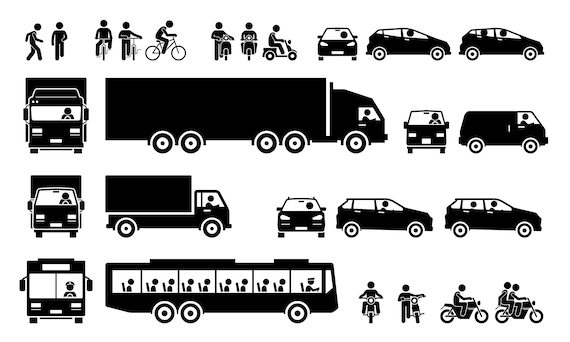
Land traffic on Sint Maarten
As a pedestrian, driver, passenger and cyclist you belong to land traffic. As soon as you take part in traffic, you must know and properly apply the main rule of traffic: Be considerate of each other.
This main rule applies everywhere in the world, including on our beautiful island of Sint Maarten. Whether you are walking through the busy streets of Philipsburg, cycling along the coast toward Simpson Bay, or taking a ride with your family to the beach at Orient Bay — you must always be considerate of other road users.
What are you not allowed to do according to the main rule?
- You may not unnecessarily obstruct traffic
- You may not endanger other traffic
- You may not do anything that could create danger in traffic
This means for example that you should not suddenly stop in the middle of the road to take a photo, or that you should not suddenly turn without signaling. On Sint Maarten you unfortunately see this happen sometimes, especially by tourists who get excited when they spot iguanas or other animals along the road.
Road users on Sint Maarten
In traffic you are never alone. You will definitely encounter other road users. One person is on a bicycle, another is in a car. Sometimes you also see children on a skateboard. This, just like rollerblading and playing on the road, is forbidden and very dangerous — especially on an island where many cars and minibuses drive that have limited visibility of small children.
Road users that we can encounter in traffic on Sint Maarten include for example:
- A parent with a stroller walking to the playground
- Tourists walking through Philipsburg or Marigot
- Cyclists on their way to school or work
- Car drivers and minibus drivers
- Workers pushing a wheelbarrow at construction sites
- Occasionally horse riders, especially in the more rural parts of the island
Different types of road users
By road users we mean:
- People who are transported on the public road by means of a vehicle, for example cars, bicycles, fat bikes
- People who push certain vehicles, for example a parent with a stroller or an ice cream vendor with their cart
- People on foot on the public road
Who is allowed where?
You will have noticed that some road users use the roadway and others use the shoulder or the sidewalk. Every road user therefore has their own place on the road. These are clear agreements that we must stick to. This is for our own safety and that of other road users.
On Sint Maarten sidewalks are mainly found in Philipsburg and some of the busier areas. In other parts of the island you often walk on the shoulder or even on the road itself, because there are no sidewalks. This makes it extra important that everyone knows the rules!
Only the following vehicles may use the roadway: cars, trucks, buses, motorcycles, scooters, bicycles and fat bikes, and horses with riders. These are the motorized vehicles and the non-motorized vehicles.
Other road users may not use the roadway. These include: a parent with a stroller, a worker with a wheelbarrow, mobility vehicles, people on roller skates, toy vehicles, children on scooters or go-karts.
Special situations on Sint Maarten
On Sint Maarten we also have special traffic situations. Iguanas sometimes cross the road, especially when it is warm. You must always slow down and give them space to cross safely. In some neighborhoods you may also encounter goats or chickens on the road.
Near the harbor in Philipsburg you sometimes see large trucks transporting containers. These need a lot of space to turn and other road users must take that into account.
The three main groups of land traffic
This is how we have arrived at the following division of land traffic on Sint Maarten:
- Pedestrians — For example: people going somewhere on foot, tourists walking through Philipsburg, children walking to school
- Non-motorized vehicles (have no engine) — For example: regular bicycles, carts, horses with riders
- Motorized vehicles (have an engine) — For example: cars, fat bikes, scooters, buses, trucks
By understanding this division and applying the main rule "be considerate of each other," we can make sure that land traffic on Sint Maarten stays safe for everyone!
5. The main rule of traffic
The main rule of traffic
The most important rule in traffic is very simple but also very powerful: "Be considerate of each other." This main rule applies to everyone who takes part in traffic, whether you are walking, cycling or sitting in a car. It is the foundation of all other traffic rules and makes sure that everyone can get safely from point A to point B.
What does "being considerate of each other" mean?
Being considerate means that you always think about other people in traffic. When you cycle to school, you watch out carefully for pedestrians on the sidewalk. When your parents drive, they watch out for cyclists and let pedestrians cross at crosswalks. It also means that you behave in a predictable way — not making sudden movements that can surprise others.
On Sint Maarten this is extra important. Tourists do not know our roads well and may unexpectedly stop to take a photo of the scenery or the famous low-flying planes at Maho Beach. Locals need to understand this and keep enough distance. On the other hand, tourists need to be considerate of schoolchildren who cycle the same route to school every day.
The three prohibitions of the main rule
From the main rule come three important prohibitions:
- You may not unnecessarily obstruct traffic. For example: not standing in the middle of the road to chat
- You may not endanger other road users. For example: not suddenly turning without signaling
- You may not do anything that could create danger. For example: not playing with your phone while cycling
What MUST you do according to the main rule?
- As a cyclist: stick out your hand when you are going to turn, so that cars know what you are planning to do
- As a pedestrian: look left and right before crossing, even at a crosswalk
- As a passenger in a car: put on your seatbelt and do not distract the driver
- Wait until iguanas or other animals have left the road — they always have priority
- Wear a helmet on your fat bike or scooter
- Keep distance from the car in front of you, especially when it is raining

What must you NOT do according to the main rule?
- As a cyclist: suddenly turning without looking or sticking out your hand
- Using your phone while cycling or driving
- Running across a crosswalk without looking
- Stopping in the middle of the road to take photos
- Racing with your fat bike through busy areas between pedestrians
- Having music so loud that you cannot hear other traffic sounds
Why is this rule so important?
Traffic only works when everyone cooperates. Just like a dance where all the dancers have to pay attention to each other, all road users have to pay attention to each other. A driver who goes too fast, a cyclist who runs a red light, or a pedestrian who is not paying attention — each of these behaviors can cause dangerous situations.
The main rule "be considerate of each other" makes sure that traffic on Sint Maarten stays safe and pleasant for everyone. It is a rule that comes from respect and care — qualities that fit perfectly with the friendly culture of our island.
6. The roads
The roads
In chapter 1 we already read about how roads came to exist. People used paths made by wild animals or they had to make roads themselves by clearing away weeds and bushes. These roads were all made of sand. Gradually the need for better roads arose, especially because of the use by cars. People then moved on to building proper roads.
At first we only had roads made of special stones. Later people used concrete and asphalt. On our island, not all roads are made of asphalt, concrete or special stones. There are still many roads made of sand.
When we look around, we can say that there are two types of roads:
1. Paved roads Paved roads are roads where a thick layer of asphalt or concrete has been applied, or roads that have been tiled with special stones.
2. Unpaved roads Unpaved roads are roads made of sand or gravel. As the name says, these roads have not been paved.
With the building of roads it has become much easier to get from one place to another.
People did not just build roads randomly. They also took into account the amount of traffic that would need to use these roads. Sometimes you also see that a road is made wider to handle more traffic.
All roads come together in one way or another — they have a shape.
If you look carefully at how roads come together, you will notice that there are four possibilities, namely:
- Intersection
- Half intersection or T-intersection
- Fork
- Roundabout
Intersection
Half intersection or T-intersection
Fork
Roundabout
Find out near your school how the roads come together!
7. The image of the road
In traffic you are never alone. There are always other road users. You must always make sure that your safety and that of other road users is not put at risk unnecessarily. As soon as someone is on the public road, they must make sure they have a good overview of the road ahead of them. That good overview of the road in front of you is what we call: the image of the road.
People do not all look the same. The same is true for streets and roads. There are asphalt roads and dirt roads. One road can be pleasantly busy and narrow, while another road can be quiet and wide. On a quiet wide road you might feel alone and isolated. On a narrow and busy road you have to pay close attention. Cars on the busy road may drive more slowly, and on the wide road a little faster. So the image of the road also has a lot to do with the behavior of road users. The image of the road can change from moment to moment. At one moment the road can be quiet and a little later it can become busy. This means you must always pay close attention and be careful.
Even your familiar route from school to home can change.
Imagine that one day there are workers working along the road. You then get a different street scene (= road image).
In an unfamiliar environment the road image can sometimes be very deceptive and misleading. This can be caused by an unexpectedly sharp bend, the absence of a sidewalk, or by bushes along the road. Based on the road image it is wise to determine your position on the road. In other words: your position on the road depends on the image of the road.
If for example workers are working along the road, you may encounter an open and dug-up shoulder. It may then be better not to walk single file but to cross over and walk on the other side. Or you must first check carefully whether it is safe to walk across the road for a moment.
On Sint Maarten the road image can change quickly. A busy tourist area like Philipsburg can suddenly become very crowded when a cruise ship arrives. A quiet road near Cole Bay can change when a construction project starts. Always stay alert and adjust your behavior to what you see around you.
Remember the following:
The appearance of roads:
- Asphalt roads (paved) or dirt roads (unpaved)
- Busy or quiet roads
The behavior of road users:
- Are they driving slowly or fast
- Are there people or animals on the road
Changes in the road image:
- Workers along the road
- Unexpected bends, etc.
8. The pedestrian in traffic
The pedestrian in traffic
The pedestrian also belongs to traffic. You already know who a pedestrian is. That is someone who goes somewhere on foot on the public road.
The pedestrian must always watch out and pay attention, because they have no protection in traffic. In an accident they are directly hit. On our island a pedestrian needs to be even more careful. There are too few sidewalks and shoulders here. You often find bushes and trees along the road as well. The pedestrian therefore often has to use the roadway, and the dangers there are very great.
This is very important:
If there is a sidewalk or a shoulder along the road, the pedestrian must always walk on the shoulder or on the sidewalk. If there is no sidewalk and no shoulder either, the pedestrian must walk on the left side of the road, so they can see the traffic coming toward them clearly.
When does a pedestrian have the right of way?
A pedestrian sometimes has the right of way. However, you must always check whether you actually get the right of way. Having the right of way and actually getting it are two different things.
- If a pedestrian is going straight ahead on the same road and a car or cyclist wants to turn across in front of you, the pedestrian has the right of way.
- If you want to cross at a crosswalk, the pedestrian also has the right of way.
Check whether you have understood the rules correctly. Indicate the correct order in the pictures below.
How should a pedestrian cross the road?
When a boy or girl has had an accident in traffic, it almost always turns out that the child crossed the road in a careless way. It is very important to cross the road safely.
Always cross the street at a place where you can clearly see the traffic approaching you from both the left and the right.
To cross well and safely, every pedestrian must follow these rules:
- Stop at the side of the road
- First look to the left (because you can first collide with traffic coming from the left)
- Then look to the right
- Look to the left again
- Is the road safe on both the left and the right? Then cross straight and quickly. Avoid going back and always keep looking. Never run across the road.
Always make sure you are seen
A bus stops at many places to let people get on or off. Sometimes you get off the bus and have to cross.
Crossing is then not so easy, because the bus blocks your view of the road. You do not have a good overview of the road. It is then very wise and safe to wait until the bus drives away. If the bus has to stay for a while, never cross in front of the bus. Always cross behind the bus.
It can also happen that you need to cross, but your view of the road is blocked by parked cars along the road. To still get a good overview of the road it is recommended to step between the parked cars and then apply the five rules for crossing.
If possible, always cross at pedestrian lights, crosswalks or at a crossing guard.
Fortunately, traffic lights are also placed at busy spots. At these traffic lights there are sometimes also lights for pedestrians. Just like the drivers of motorized and non-motorized vehicles, the pedestrian must also pay attention. As soon as the light turns green, the pedestrian must cross straight and quickly. But as always, you must first pay close attention to the traffic.
If the pedestrian light is red, the pedestrian may not cross. At the pedestrian light there is often also a button. There is a picture above it showing that you need to press the button if you want to cross. Press the button calmly and wait until the pedestrian light turns green. Do not be impatient!
Crosswalks are specially made to make crossing safer. Drivers know that at a crosswalk there may be people who want to cross and must then pay extra attention. Crosswalks are almost always found near schools, churches and busy intersections.
Always apply the five rules you have learned for crossing, because there are sometimes drivers who are not paying proper attention!
Many schools use crossing guards to help children and their parents when crossing. You often see them after school with their uniform on and a stop sign in their hand.
On a whistle signal from the teacher, they stop the traffic. As soon as the crossing guards raise their stop sign, all vehicles on the roadway must stop. Pedestrians can then safely cross between the crossing guards. Fortunately most children and parents always do this properly.
It is a shame that some children and adults think that this stop signal is not meant for them. Other adults are in such a hurry that they cross somewhere else. This is a bad example. If your mother, father, brother, sister or another family member or friend does not wait, give them a reminder. So that they think of it next time. This way you also contribute to road safety. And remember — you must also set a good example. Always cross at a crosswalk and wait for the signal from the crossing guards.
A few more points that are very important for a pedestrian
- Always watch out carefully for your little brothers, sisters and friends. Hold them firmly by the hand so they cannot suddenly run away.
- Children must not walk where moving traffic passes. So children walk on the left side of an older person.
- When it rains, the pedestrian must be extra careful. Watch out carefully when crossing the road, because drivers cannot brake their vehicles as quickly. The chance of an accident is therefore much greater in rainy weather. On Sint Maarten rain showers can come on suddenly — always be extra alert when this happens.
- Playing in the street is life-threatening. So when you are going somewhere, do not take toys with you to play with along the way. You will then pay less attention to traffic.
- Even if you see someone on the other side waving at you, always think of the five rules first before stepping to the other side.
- If you are brought to school or picked up by car, it is wise for the driver to let you get out or get in on the school side — you then do not have to cross.
- Ask the driver who brings you to school or picks you up to please not stop on the crosswalk or in front of the school gate. Children cannot then safely cross. The car blocks the view when children want to cross, and because the car is on the shoulder, walking on the shoulder is also impossible.
- If you need to be somewhere, make sure you leave home early. If you are late, do not run and do not cross carelessly. It is better to arrive late at your destination than to arrive too early at the hospital.
- When it is dark, wear something light-colored. For example a white shirt. Nowadays there are also sneakers that give off a light when you walk.
9. The bicycle
On our island there are quite a few bicycles. Some children are allowed to take their bicycle onto the public road. As soon as you are on the public road with your bicycle, you belong to traffic and you must apply the traffic rules for cyclists. Here on our island there are almost no bicycle lanes and so the cyclist must use the roads that are intended for other traffic. This makes the risk of an accident for cyclists very high.
What requirements must a bicycle meet in traffic?
- A bicycle must have properly working handlebars.
- A bicycle must have a properly working bell.
- A bicycle must have at least one properly working brake.
- In the evening a bicycle must have a lit front light, white or yellow in color, a lit red rear light and a reflector. (Some bicycles already come with their reflector.)
For safety it is also wise if your bicycle has the following:
- The bell must be audible up to 25 meters away from the bicycle.
- Your bicycle must have a rear fender, of which a section of 30 cm must be white in color.
Your bicycle must therefore meet the first 4 points. But for a safe bicycle, your bicycle must meet all 6 points.
What are you not allowed to do as a cyclist?
- You may not let yourself be towed by another vehicle.
- You may not ride without hands.
- Your feet must be on the pedals.
What must a cyclist know well before going onto the public road?
- A cyclist must always have at least one hand on the handlebars. A cyclist must have both feet on the pedals.
- Cyclists ride a maximum of two side by side.
- The front light of the bicycle must shine diagonally downward and must not blind other road users.
- A cyclist must ride on the right side of the road and overtake on the left.
- A cyclist must make a left turn as wide as possible and a right turn as tight as possible.
- A cyclist must always clearly indicate what they are planning to do. This is in the interest of their own safety and that of others. So:
- If a cyclist wants to turn left, they must first look back to check whether other traffic is coming. They must clearly indicate that they want to turn left by sticking out their left hand. A cyclist who wants to stop must also indicate this very clearly by moving their left hand up and down.
- A cyclist may only carry one passenger and only if the bicycle is equipped for this. So with a seat (for example a rear rack) and footrests.
- A cyclist may not carry anything on the bicycle that is wider than 75 cm.
- A cyclist may never let themselves be towed by another cyclist or another vehicle.
- A cyclist may not carry dangerous objects on their bicycle.
10. Language of the road
A car cannot talk. A road cannot say anything. And if a cyclist shouts that they want to turn left, nobody hears what they are saying. Yet the car, the road and the cyclist have to tell each other things all the time — such as when they want to turn left or right, where to drive, where to stop and where you are not allowed to enter. Cars, roads, cyclists and pedestrians can fortunately also communicate without words. They give each other signals.
The use of signals began a very long time ago. Think of the Native American signs we can see in caves. To this day we make great use of signals. Think of sign language, which people with speech and/or hearing difficulties use to communicate with each other, and the various signs on or beside the road. The advantage of using signals is that everyone can understand them, regardless of the language they speak.
But do not be mistaken! Signals are not used just like that. There are rules attached to them. Signals provide information — they tell you something.
Look at the signals shown above. These signals tell you something. If you pay close attention, you will notice that there are signals everywhere telling you what you may or may not do, that you need to pay attention, and so on. With most signals you only see a picture — there are no words with them. In traffic too, people must work with signals. Signals on the road surface, signals along the road and signals that we ourselves must give. This is how we communicate with each other in traffic. So in traffic we use what is essentially a language.
We call that language: the language of the road.
We divide the language of the road into:
- Active language of the road
- Passive language of the road
10.1. Active language of the road
By active language of the road we mean those actions that people perform in traffic to clearly show other road users what they are planning to do.
The active language of the road includes:
- Signals that you give yourself
- Signals that other people give (through their vehicle)
- Signals from traffic controllers
1. Signals that you give yourself
- Ringing your bell: it is always required to warn other road users of danger.
- Sticking out your arm: it is required to stick out your arm when you want to change direction.
2. Signals that other people give (through their vehicle)
- Through their vehicle, people can give many signals. With these they make something clear to other road users. Think of turn signals, brake lights, reverse lights, the horn, etc.
- The police, fire department and ambulances have the right of way when they use their multi-tone horn and flashing light.
3. Signals from traffic controllers
Signals from a police officer or a crossing guard must always be followed.
Conclusion:
Actions that you or someone else performs, signals that you or someone else gives to make something clear to other road users, we call the active language of the road.
10.2. Passive language of the road
1. Traffic lights
2. Pedestrian lights:
- Green: watch out and cross
- Flashing green: do not start crossing anymore; if you are already crossing, walk across quickly
- Red: never cross
Many pedestrian lights work when you press the push button. Some lights make a sound: at a red light a ticking sound and at a green light a rattling sound. This way blind and visually impaired people can hear whether the light is on green or red.
B. Traffic signs
C. Markings painted on the road surface
1. Pre-sorting lanes Rules:
- You must drive in the lane or on the strip in which the arrow points in the direction you want to follow; as soon as you are driving next to a solid line, you may no longer leave the lane.
2. Dotted lines Two directions. You may cross over that line if necessary.
3. Solid lines With a solid line you may not cross over the line.
4. Rectangles Entry side (sometimes across the full width of the road, one-way traffic, and sometimes partially).
5. Crosswalks
- Cross at the crosswalk if it is nearby; wait with crossing until the traffic stops for you or has passed;
- Keep watching carefully when you cross.
6. Stop line You must stop before the stop line, even if there is no traffic on the other road.
7. Shark teeth You must let everyone coming from the left and from the right go first (= yield). Sometimes across the full width of the road, when you are leaving a one-way road.
8. Combination shark teeth/stop line You must stop and let everyone go first.
9. Speed bump In certain places speed bumps are sometimes placed for the safety of pedestrians. A speed bump forces a driver to reduce their speed.
Conclusion:
Signs placed along the road and markings painted on the road surface to make something clear to road users, we call the passive language of the road.
We can therefore say that land traffic can be regulated by:
- Agreements — For example: we cycle and walk on the right; when changing direction we stick out our arm.
- Traffic signs — See next chapter.
- Markings on the road — For example: dotted lines, shark teeth.
- Traffic lights — For example: when the light turns red, you must stop.
- Traffic controllers — For example: police officers, crossing guards.
10.3. Signs
When you look along the road, you see many different kinds of signs. For example advertising signs, information signs, hanging signs and traffic signs. All these signs tell you something.
With advertising signs, shopkeepers and manufacturers advertise their stores or products (for example a hardware store or supermarket). With information signs we indicate something, for example a gas station. By using hanging signs, stores can be seen and recognized from far away (like a pizza restaurant or a grocery store). And traffic signs tell us something related to traffic.
A very long time ago there were no signs needed. There were very few cars and they did not drive fast. If two cars arrived at an intersection at the same time, which happened very rarely, one of the cars would let the other go first. Later there were many more cars and this was no longer possible. As we have already learned, traffic rules came about, and signs came with them. This way everyone can now know when they have the right of way, when they must let someone go first, or when they are or are not allowed to do something. Traffic signs increase the safety of road users.
On our island there are quite a few traffic signs.
Based on their shape and color we can divide traffic signs into 5 categories. To tell the signs apart we use a fixed starting point.
By dividing the signs by shape and color, the signs are now easy to recognize.
For example when you see this sign, you know that it is a watch out sign.
Why? The shape is triangular with a red border. So when you see such a sign, you immediately know that you must watch out.
In this way you can also recognize all other signs that do not belong in traffic.
10.4. Relationship between traffic signs
There is a relationship between traffic signs and other kinds of signs that we can come across in different places. These signs have nothing to do with traffic. But the same rules apply to the use of these signs as those in traffic.
Below you see some examples of these signs.
Do you recognize any of these signs? Where have you seen one of these signs? Do you know any more of these signs?
11. 11. Right of way and yielding
If everyone starts driving at the same time it becomes chaos! That is why right-of-way rules have been made. But pay attention — you do not just have the right of way, you have to receive it! So always keep paying attention!
What does right of way mean?
When you are cycling on the road, you may encounter traffic coming from a side road. You then need to know well whether or not you may go first. Sometimes you have to stop to let someone else go first. You must yield. Sometimes someone else has to stop to let you go first. You must receive the right of way.
Right of way therefore means: being allowed to go first.
In traffic, right of way is a very important concept. Every single day, everyone who takes part in traffic must know who has the right of way. If someone does not know this or is unsure, accidents happen. So pay close attention!
What are the most important rules:
Who has the right of way?
1. The big five always have the right of way over all other traffic. The big five are:
- Police car with blaring siren
- Fire truck with blaring siren
- Ambulance with blaring siren
- Funeral procession
- Military convoy
The groups have priority over each other in the order in which they are listed. So a police car with a siren has priority over a fire truck with a siren, an ambulance with a siren, a funeral procession and a military convoy.
There are a number of traffic signs that indicate who has the right of way or who must yield.
Priority road. You must receive the right of way from all drivers coming from the left and from the right.
End of priority road. The priority road ends here.
Priority intersection. You must receive the right of way from all drivers coming from the left and right.
Intersection with priority road. You must stop and yield to drivers coming from the left and right.
Intersection with priority road (STOP sign). You must stop and remain stationary and yield to drivers coming from the left and right. At this sign you must also stop even if no traffic is coming.
When these signs are present, the right of way is regulated. If these signs are not there, the "normal" right-of-way rules apply.
The rules:
- The big five!
- A driver on a priority road has the right of way over a driver approaching that road, even if the priority road makes a bend.
- At an equal-priority intersection, a driver coming from the right has the right of way.
- At an equal-priority intersection, drivers yield to drivers of motorized vehicles.
- A driver coming from an unpaved road must yield to drivers on a paved road coming from the left and/or right.
- Through traffic going straight ahead on the same road has priority over turning traffic on that road. This applies to pedestrians too!
- A driver turning right has priority over a driver turning left.
- At a T-intersection, all traffic on the continuing road has priority over traffic on the road that ends.
Two more very important rules!
- Drivers must let blind and visually impaired people, carrying a white cane with one or more red rings, and all other people who have difficulty moving, go first.
- Drivers must let pedestrians and drivers of a mobility vehicle, who are crossing at a pedestrian crossing or who are clearly about to do so, go first.
If you want to practice with right-of-way situations, click here.
On the following page we explain the rules with examples.
All traffic rules are laid down in a law. Below is a section from the law about "yielding and right-of-way rules."
11.1. Voorbeelden bij voorrang
Examples of right of way
The right-of-way rules are very important! Otherwise accidents happen. Below we explain the rules again with examples.
The big five! This is an equal-priority intersection. Normally car 2 would have the right of way. But because the fire truck's siren is on, the fire truck now has the right of way.
A driver on a priority road has the right of way over a driver approaching that road, even if the priority road makes a bend. At the intersection there are traffic signs that regulate the right of way. The blue car sees a right-of-way sign and therefore has priority over the red car.
At an equal-priority intersection, a driver coming from the right has the right of way. This is an equal-priority intersection, so traffic from the right has priority. That is why the blue car goes first.
At an equal-priority intersection, drivers yield to drivers of motorized vehicles. This is an equal-priority intersection. Drivers must yield to drivers of motorized vehicles, which is why the car goes first here — even though the cyclist is coming from the right.
A driver coming from an unpaved road must yield to drivers on a paved road coming from the left and/or right. Car 2 is driving on an unpaved road. Therefore car 2 must yield to car 1.
Through traffic going straight ahead on the same road has priority over turning traffic on that road. This applies to pedestrians too! The cyclist is going straight ahead on the same road. Therefore the cyclist has priority here. Another example: the pedestrian is going straight ahead on the same road and therefore has priority over the car.
A driver turning right has priority over a driver turning left. The red car is turning left and therefore has priority over the blue car.
Note: there appears to be a small error in the original text here — based on the rule, it should be the car turning RIGHT that has priority. Please check the original.
At a T-intersection, all traffic on the continuing road has priority over traffic on the road that ends. This is a T-intersection. The blue car is driving on the continuing road and therefore has priority over the red car.
Two more very important rules!
- Drivers must let blind and visually impaired people, carrying a white cane with one or more red rings, and all other people who have difficulty moving, go first.
- Drivers must let pedestrians and drivers of a mobility vehicle, who are crossing at a pedestrian crossing or who are clearly about to do so, go first.
12. Safety
An accident can happen in the blink of an eye. This is a well-known saying that you often hear. What does it mean?
Well, that you must do everything to prevent accidents. As you already know, you are never alone in traffic. Because of a very small mistake by someone else, for example, an accident can happen that could leave you injured. That is why it is very important to always take precautions for your safety.
The seatbelt
On Sint Maarten, traffic laws set out all the rules that apply to traffic and road users. These laws also include rules about the use of a seatbelt.
The law states:
- Both the driver and all passengers of motorized vehicles must wear a seatbelt.
- Children younger than 4 years must be transported in a special child safety system such as a Maxi-Cosi car seat.
- Passengers with a height of less than 1.50 meters use a three-point belt as a lap belt or a three-point belt when using a child safety system.
- Passengers with a height of less than 1.50 meters use the seat next to the driver only if no front airbag system is present, or if it has been switched off.
- A child safety system can be placed on the seat next to the driver in vehicles without a front airbag system, or if the front airbag system has been switched off, and the passenger is facing backward.
It is very unfortunate that nurses have to treat various lightly and seriously injured people every day. In a car accident, people who are not wearing a seatbelt can be thrown against the windshield or the steering wheel.
Every year approximately 80 children are lightly injured and 10 children are seriously injured in our traffic. In most cases these children were not wearing a seatbelt.
Remember: a seatbelt is not a decoration. Seatbelts have been around for a very long time, but not everyone yet realizes how much suffering you can prevent by using one. Below are two videos. The first video shows how old seatbelts already are — this video was shown back in 1971. The second video shows the impact in an accident without and with the use of seatbelts. Every year there are campaigns that stress the use of seatbelts, because many people still do not realize their importance.
Can you answer the question below after watching the videos?
If you pay close attention, the seatbelt consists of two parts. The best way to wear a seatbelt is:
- You must wear it across the pelvis and across the breastbone, the ribs and the collarbone. Not across the stomach or across the arm. The main rule is that the belt goes over the bones, not over the flesh.
- The belt must not be twisted, because then it has become narrower and can cut into the flesh in a collision.
- If the belt is worn with slack, it is less effective. So wear it as tight as possible. The belt is often adjustable.
The headrest
Adjust your headrest properly. At the front of the car, and in some cars also at the back, you have headrests.
- The top of the headrest is level with the top of your head.
- The distance between the head and the headrest is less than 4 cm.
Why a headrest?
Because in a collision, especially a rear-end collision, you can suffer a neck injury. This neck injury is also called whiplash. A neck injury can cause many complaints, such as headaches, nausea and blurred vision.